
Forces are retaking neighbourhoods without answers to at least five basic questions. Who holds the ground, and for how long? Where do detainees go, who is responsible for them, and what happens to seized weapons, so that they do not flow straight back to criminal groups?
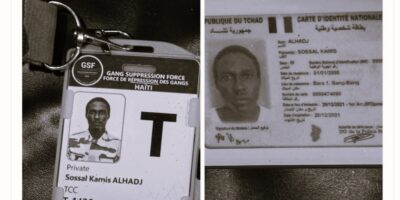
On 18 October, four Salvadoran aviation technicians serving with the UN-authorized Gang Suppression Force (GSF) went missing after an ambush in Santo, Croix-des-Bouquets. One month later, they have all but disappeared from public debate, while El Salvador has deployed up to 2,500 troops to Haiti.
Everything seems to have changed: in security, in communication, in politics, and in the scale of an escalation pursued all-in. Yet this turning point conceals a paradox. Behind the frenzy of communication, much less has changed at the core than it appears. The Salvadoran turn transforms, because a sudden surge has made possible operations that were not happening before. But it also reveals what was never prepared: a strategy for the day after operations. Battles can be won. Whether this moment becomes a plan, or one more cycle of clearance without justice, now depends on Haitian authorities and their partners.
Security: more forces, still no strategy
What has changed is real. Within two weeks, El Salvador deployed a force comparable to the entire GSF, which took a year to assemble. Operations have multiplied on several fronts. At Sylvio Cator, the police and the Task Force cleared the area before Salvadoran troops were asked to hold it, applying the clear-and-hold logic that has long been missing. If sustained and replicated, this would be the most significant operational change in years.
What has not changed is the absence of a conductor. Five forces now operate in Haiti: the GSF, the Salvadoran contingent, the Task Force supported by the private company Vectus Global, the Haitian National Police and the Haitian Armed Forces. They are joined by self-defence brigades and by agents of the Brigade de surveillance des aires protégées (BSAP). All act under different legal regimes and chains of command. Coordination and deconfliction are only now taking shape, and only after real incidents. But there was no common strategy before the Salvadorans arrived, and there is still none.
Hence the first paradox: the response has never been so active, and never so difficult to read. Santo was targeted to recover the technicians, the very reason for the deployment. Boston was hit, and its leader killed, without anyone explaining whether this was an opportunity or a priority. Lanmò San Jou’s mansion was destroyed after President Bukele publicly asked, on X, for its exact address, a striking episode for a house whose location had been publicly known for years. Until a shared strategy defines what these forces must achieve together, and under whose authority, they will keep navigating blind.
Communication: a battle of narratives
The second paradox is that the forces conducting most operations are not those shaping how they are presented. At Sylvio Cator, the Haitian account was that the police, supported by the Task Force, retook the stadium and then asked Salvadoran troops to hold it. The Salvadoran account, which followed almost immediately and reached a far wider audience, presented the operation as a Salvadoran achievement. More broadly, statements, videos and unverifiable claims circulate at a pace that makes fact-checking almost impossible. Yet the actors involved are not bound by the same rules. The GSF, the police and their partners operate under mandates, rules of engagement, reporting obligations and human rights standards, imperfect as they are. The Salvadoran contingent operates under an agreement that has not been published. When the loudest narrative comes from the actor least bound by transparency, the line between facts and claims begins to blur. For Haitian institutions and the partners who conduct and fund much of the work, this raises a legitimate question: how can they ensure that their own action is visible, understood and accountable?
A further problem follows. Once the crisis is framed as a war, every other option, whether dialogue, demobilization, justice or stabilization, is mechanically dismissed as weakness, naivety or even complicity. The noise of war crowds out any political alternative, at the very moment when Haiti needs one most. For Haitian authorities, the police, the GSF and the UN, the answer is not to compete on volume, but on substance: visible results, transparency, and a strategy that can be understood and evaluated.
Criminal groups and politics: a conflict that redraws power
Decapitation is one of the most visible results of the past month. Gang leaders are under unprecedented pressure, and several have fled their strongholds. Yet the killing of Mathias Saintil raises questions that remain unanswered. Was Boston chosen for its strategic value, because intelligence was available, or by opportunity? And what does it change for Cité Soleil, for the coalition and for the networks behind it?
Beyond individual leaders, how criminal groups will respond remains an open question. The already fragmented Viv Ansanm coalition could reconsolidate against a common foreign enemy, fragment further or open diversion fronts. Some leaders could seek a negotiated exit while others fight to the end. Two risks stand out. First, while all eyes remain on Port-au-Prince, violence continues elsewhere, with fighting in Arcahaie, Cabaret and the Artibonite. Second, maximum pressure may mean maximum exposure. Haitian gangs have shown they can wait for weeks or months before relaunching attacks on several fronts, as in Kenscoff in August. A slowdown before retaken areas are consolidated would open precisely that window.
A deeper issue lies behind the groups themselves. Haiti’s criminal groups sit within a triangle linking them to political and economic sponsors, which is why killing a leader, on its own, changes so little. Each death opens a succession: a lieutenant takes over, a rival expands, or the group splinters. Meanwhile, the sponsors who armed, financed and protected the leader remain in place, and can invest in someone else. Three decades of kingpin strategies across Latin America have shown that removing leaders reshuffles criminal markets rather than dismantling them.
The real test, then, is whether these eliminations put pressure on political-criminal relationships, or simply redistribute them. This is where security meets politics: in Haiti, security operations are also about power. Elections are expected in July 2027, and according to the UN, roughly a quarter of the population lives in areas controlled by criminal groups. Today’s operations will shape not only the electoral calendar, but also which parties, candidates, local power brokers and economic interests emerge stronger or weaker from the reconfiguration of territories. The war against criminal groups can redraw the balance of power to the benefit of competing political projects. In a pre-electoral context, this political dimension cannot be underestimated.
Civilians, demobilization and the day after
Forces are retaking neighbourhoods without answers to at least five basic questions. Who holds the ground, and for how long? Where do detainees go, who is responsible for them, and what happens to seized weapons, so that they do not flow straight back to criminal groups? Who prevents lynchings, revenge killings and self-defence brigades from filling the vacuum? To which homes and services will displaced families return? And where can those who want to leave criminal groups go?
This last question reveals another paradox: military pressure is generating a demand for exit that no one is ready to meet. Lanmò San Jou has requested UN mediation, and his group has reached out to the National Commission for Disarmament, Dismantlement and Reintegration (CNDDR). In Haiti, contacts with gang leaders happen every day, always out of sight and always denied. Ending the hypocrisy around these contacts would be a first step toward bringing them into an accountable framework. Dialogue is not impunity: it requires justice, and a process led by Haitian authorities.
More significant still is what is happening below the leadership. Conversations on the ground point to a rise, since the Salvadoran deployment, in the number of adult members seeking to leave criminal groups. Yet the mechanisms to receive them either do not exist or are not ready. The CNDDR, reinstated in February 2026, remains embryonic, as does the political will meant to support it, and the UN mandate to support safe exits exists largely on paper. For children, limited mechanisms exist through UNICEF; for adults, there are no surrender sites, no reception mechanisms and no public exit conditions.
This is not for lack of strategies. Over the years, the Haitian government, the UN system, international partners and development actors have produced dozens of documents on demobilization, peacebuilding and stabilization. Very few have been implemented. And a deeper gap remains: a limited understanding of how different groups actually work. Criminal groups in Haiti are not a single bloc. They differ in structure, leadership and economic base, and their members range from commanders and seasoned fighters to forced recruits and children. Each profile calls for a different response. Without this granular analysis, any programme risks treating very different people in the same way, and failing.
What is needed is a clear sequence. First, a plan grounded in fine-grained analysis of each group and territory. Second, a solid roadmap with clear objectives and measurable results, open to independent evaluation. Third, the means to implement it, communicate it to those it targets, and sustain it over time. Concretely, this means an operational CNDDR and peacebuilding strategy in a few targeted neighbourhoods, backed by the government, the UN system and international partners, with the political support and funding to deliver. Demobilization and humanitarian response must be designed together, in the same places, at the same time.
International: a precedent in the making
At the international level, a Security Council-authorized mission now operates alongside a bilateral force that largely escapes its framework and its human rights reporting. This matters for accountability. The UN found that half of the 1,167 people killed and 459 injured between July and September 2026 fell during security operations, and that more than 16 percent of those victims had no link to criminal groups. If a civilian is killed, a detainee mistreated or a surrender mishandled during a Salvadoran operation, who will be responsible, and before whom? Today, no one can answer that question with certainty.
It also matters for the GSF itself. If a contributor that suffers losses can act outside the common framework, others may follow, or hesitate to contribute, ahead of the mandate’s renewal in March 2027. The agreement governing the Salvadoran deployment should be published, and the Haitian state must exercise full authority over the forces it hosts, saying clearly who commands and who is accountable.
The Salvadoran turn shows what military momentum can produce, and what is still missing: a coherent strategy, sustained dialogue between the Haitian government and its partners, and clear answers for the day after. It is also an opportunity, and an urgent one, since operations will generate needs far beyond anything observed so far. Haitian authorities and their international partners, including development actors, have a narrow window to put in place a genuine stabilization strategy. The plans largely exist on paper; implementing them means linking demobilization, humanitarian action and development in the same neighbourhoods, with clear objectives, measurable results and independent evaluation.
Such a strategy must rest on a duty of care toward civilians, detainees and those who surrender. Pure escalation could push a city already on its knees into an even more brutal cycle of conflict, and civilians would once again pay the price. That responsibility lies with the Salvadoran authorities, but also, and above all, with the Haitian government.
Romain Le Cour Grandmaison, Director of the Haiti and Caribbean Observatory, Global Initiative Against Transnational Organized Crime (GI-TOC)




Comments