
It is unclear whether the gang leader was simply passing through or whether he is now taking refuge in this densely populated city of nearly half a million residents
Foreign and Haitian forces have intensified their operations in the Cul-de-Sac Plain since the disappearance of four Salvadoran aviation technicians in the area on October 18. On the sidelines of these operations, Wilson Joseph, known as « Lanmò San Jou, » was spotted in Carrefour on Friday afternoon, according to a witness.
The gang leader, dressed in a white short-sleeved shirt, was surrounded by heavily armed men and was leaving a hotel located in Thor. AyiboPost has learned that a meeting involving several gang leaders, including Chrisla « Krisla » Chéry, had been held at this hotel the previous afternoon.
It is unclear whether the gang leader, who is accused alongside Chen Mechan of attacking the foreigners in Santo last month, was simply passing through or whether he is now taking refuge in this densely populated city of nearly half a million residents. “I saw Lanmò San Jou, and I almost had diarrhea,” the source said.
More and more armed men from the Plain and Bon Repos have been arriving in Carrefour in recent weeks, according to a prominent local resident. Most of the newcomers are taking refuge in hotels throughout the municipality.
“Some of these establishments are closing their doors so they do not become targets of drone attacks,” said the father of a family, who was himself a victim of extortion by Krisla.
Several individuals wanted by the authorities, including former head of the General Security Unit of the National Palace, Dimitri Hérard, have taken refuge in Carrefour. According to security specialist Emmanuel Paul, the municipality benefits from a geographic advantage due to its coastal location and the protection provided by the Massif de la Selle mountain range.
It also benefits from the management of Krisla, whose experience, as well as his protection and organizational capabilities, strengthen control of the area.
The Salvadoran technicians attached to the FSG were returning from a supermarket when gangs attacked their white Toyota SUV last month. According to Lanmò San Jou, they are dead.
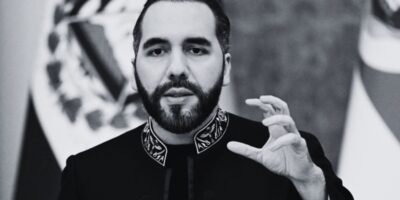
However, the Salvadoran president has sent more than 2,000 members of his country’s special forces to support search efforts and, he hopes, bring them back “alive.” At least four soldiers from the Gang Suppression Force, as well as members of the civilian population, have been injured during these operations.
A source familiar with the situation told AyiboPost that only 200 of the new military personnel sent from El Salvador have been placed under the command of the FSG.
As of November 5, most of the institutions involved had no knowledge of the parameters of the Salvadoran mission, its chain of command, or the nature of its relationship with the Haitian state. It remains unclear who will bear the costs incurred or whether this new force will conduct joint operations with the FSG.
The UN-approved FSG, the police, mercenaries contracted by the government, and Salvadoran military personnel continue their operations in the Cul-de-Sac Plain, an area partially controlled by Lanmò San Jou.
The large number of actors operating on the ground raises questions regarding coordination, compliance with international law, and the protection of civilians in operational areas such as Carrefour, where gangs effectively hold hundreds of thousands of civilians hostage.
Since the arrival of the Salvadorans, gang members have forced residents of these areas to set up barricades and protest against the foreign troops. They have also prevented people from seeking refuge elsewhere, fueling accusations that the population is being used as a human shield, according to testimonies collected by AyiboPost.
Since last year, officers from a “task force” introduced by Prime Minister Alix Didier Fils-Aimé and composed in part of foreign mercenaries have been dropping explosive drones on several neighborhoods where gangs operate.
To date, these drones have killed only a very small number of notorious gang members.
However, according to the human rights organization Combite for Peace and Development (CPD), task force officers killed more than fifty civilians, including children, with drones in January.
In September of last year, they also killed about twenty people, including at least eight children, in Simon-Pelé during an explosive drone attack. The state has announced no investigation and has provided no information on accountability mechanisms regarding the foreign operators.
Since January, at least 5,700 people have been killed or injured in Haiti, according to the United Nations. A UN source told AyiboPost that Mathias Saintil, a gang leader operating in Boston and the number two figure in the G9 gang, was wounded yesterday, Thursday, during an operation in Cité Soleil. He died today, making him the first significant gang leader killed by security forces.
In communities affected by violence, the Salvadoran intervention has been met with both hope and skepticism. Hundreds of residents from several neighborhoods in Port-au-Prince demonstrated in the streets this afternoon in support of President Nayib Bukele. However, concerns remain.
“I do not want people to get carried away,” a communications professional who fled Santo 17 after the launch of the operations told AyiboPost. “Bukele’s men came to look for their fellow citizens. I do not think they came here to eliminate the gangs.”
Another resident of Santo, who says he returned to the neighborhood yesterday, reported finding several homes and small businesses destroyed. According to him, the damage resulted from recent clashes between law enforcement forces and gangs in the area.
An employee of a company specializing in office supplies sales, he said he remains optimistic about the outcome of the operations. “I believe the gangs are afraid,” he told AyiboPost. “If law enforcement remains consistent, I think they will eventually defeat them.”
By: Widlore Mérancourt,Wethzer Piercin,Jérôme Wendy Norestyl



Comments