
Anie Alerte said she chose to hire Haitians in order to help her community in the United States. However, the termination of the Humanitarian Parole program in July 2025 and that of TPS last July are now undermining the development of the initiative.
Haitian artist and businesswoman Anie Alerte launched Zile Boutik in North Miami Beach, Florida, in October of last year.
The company, which specializes in selling a wide range of goods and handicrafts imported from Haiti, employed about ten people, including eight Haitian nationals who benefited from Temporary Protected Status (TPS) or the Humanitarian Parole program. These programs allow nationals from countries experiencing crises to work in the United States.
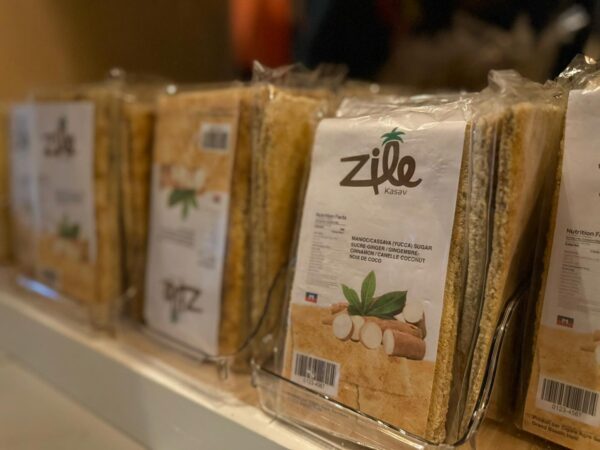
Product section at the Zile boutique. Credit : allaroundhaiti on Instagram
Alerte said she chose to hire Haitians in order to help her community in the United States. However, the termination of the Humanitarian Parole program in July 2025 and that of TPS last July are now undermining the development of the initiative.
Fearing arrest and deportation to Haiti, employees no longer dare to go to work. Only two employees remain at the business, Alerte complained in an interview with AyiboPost. Since then, the company’s revenue has fallen by 90%.
The situation is also affecting other Haitian-owned businesses in the United States that employed Haitian workers benefiting from TPS, or whose customer base consisted primarily of Haitian nationals.
Some have been forced to shut down, while others are struggling to continue operating because of labor shortages.
The leaders of these businesses often refuse to speak to the media for fear of drawing the ire of the U.S. administration. Of about ten businesses and entrepreneurs contacted by AyiboPost, only two agreed to discuss the current situation.
Jhonson Napoléon, owner and chief executive officer of Choucoune, said his company has been grappling with the departure of a significant portion of its workforce. The company specializes in the production, processing and marketing of Haitian products, including coffee and rice. It sells its products in the United States and several other countries.
Napoléon employed fifteen workers, including five Haitians benefiting from Temporary Protected Status. Those five Haitian nationals are no longer working for him.
The company’s driver, who was also a TPS beneficiary, decided to stay home after witnessing the arrest of a migrant by U.S. immigration authorities. The incident occurred during a delivery to a supermarket and left a deep impression on him. He described it as “traumatic,” Napoléon recounted.
Fearing arrest and deportation to Haiti, employees no longer dare to go to work. Only two employees remain at the business, Alerte complained in an interview with AyiboPost. Since then, the company’s revenue has fallen by 90%.
Since the suspension of TPS for Haitians, the entrepreneur said, the company has recorded a 50% decline in sales revenue for one of its products, Kola Choucoune.
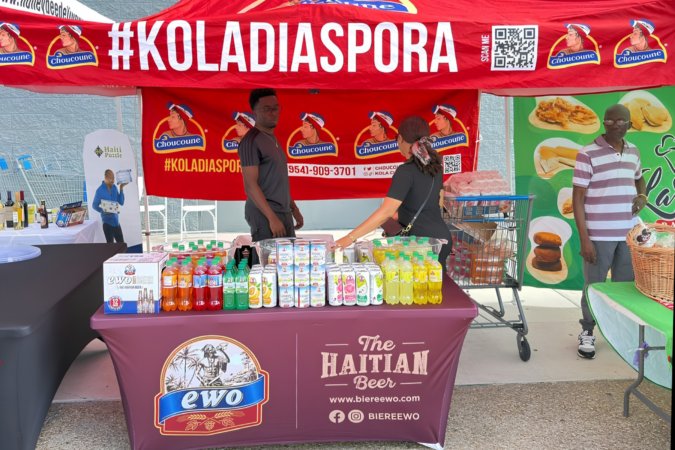
A Kola Choucoune booth. Credit: Kola Choucoune on Instagram
Choucoune distributes its products to about twenty branches of the Presidente supermarket chain in Florida. The company has now adopted an online sales strategy to cope with the situation.
“Before TPS was suspended, we sold $70,000 worth of products to these supermarkets every week. Now, they purchase less than $10,000,” Napoléon said.
The entrepreneur attributes the decline to the fact that many customers, most of them Haitians benefiting from TPS who regularly shopped at these supermarkets, are now forced to stay home.
Reached by AyiboPost, Naed Jasmin Désiré, an official with the Haitian-American Chamber in Florida who has lived in the United States for four years, confirmed that these two cases are far from isolated.
Napoléon employed fifteen workers, including five Haitians benefiting from Temporary Protected Status. Those five Haitian nationals are no longer working for him.
“I know several Haitian businesses that have been forced to dismiss almost all of their employees because those employees are TPS beneficiaries,” she said.
This situation extends far beyond Haitian-owned businesses.
In the United States, business organizations fear a shock to the labor market following the end of TPS, with notable impacts on sectors such as hospitals and elder-care services.
The restaurant industry has also been hit hard.
Wilkinson Séjour, a Haitian-born entrepreneur and owner of the Chef Creole restaurant chain based in South Florida, told the American television network CBS in August that he could be forced to close two of his seven restaurants because of the situation.
The businessman also said he had lost his entire management team, as well as several employees, all of whom were TPS beneficiaries and had been forced to leave their positions.
See also : These Haitians, beneficiaries of the Biden program, who left the United States
The termination of TPS for Haitians is part of a broader set of immigration measures undertaken by the Trump administration.
During his campaign, the president promised that, if elected, he would launch the largest deportation operation in the country’s history.
These Haitian nationals, who have now been living without legal status and therefore without the ability to work in the United States for about three months, are exposed to the risk of deportation.
Several hundred migrants have already been deported to Haiti by the United States since the termination of this status.
“Before TPS was suspended, we sold $70,000 worth of products to these supermarkets every week. Now, they purchase less than $10,000,” Napoléon said.
An AyiboPost article published in January 2026 warned about the risks faced by TPS beneficiaries, most of whom arrived in the United States after the January 12, 2010 earthquake.
The report highlighted the severe consequences such a decision could have on thousands of Haitian families who have been established for nearly twenty years in both the United States and Haiti, where they own property and have children, and who risk losing everything.
In a statement published on August 5, Global Refuge, one of the largest American organizations working with refugees and immigrants, described the decision to end TPS as “economically counterproductive and morally indefensible.”
By : Wilder Sylvain






Comments