
Smoking is responsible for 15% of new cancer cases worldwide, more than any other individual preventable cause of the disease.
Nearly 3,000 people die each year in Haiti from diseases attributable to tobacco — a massive death toll that, on its own, amounts to more than half of the devastating toll caused by gangs in 2025.
Yet Haiti is one of the few countries in the Americas without a comprehensive legal framework regulating the advertising, promotion, and consumption of tobacco products.
A World Health Organization report published last year found that 68 countries have comprehensive bans on tobacco advertising, promotion and sponsorship, covering just over two billion people worldwide.
Haiti is an exception.

A Comme il faut billboard on Airport Road, August 2026. Photo: AyiboPost
The situation stands in contrast to the commitment the country made in 2003, when it signed the WHO Framework Convention on Tobacco Control (FCTC). The treaty calls for a ban on tobacco advertising because of its devastating effects on public health.
More than 20 years later, the treaty has still not been ratified, and no specific regulation comprehensively prohibits or restricts the tobacco industry’s promotional strategies.
In the absence of such provisions, manufacturers and importers continue to freely promote their products on billboards, in traditional media and on social media, AyiboPost found.
According to the WHO, tobacco advertising, promotion and sponsorship encourage people to start smoking, particularly young people, and contribute to increased tobacco consumption.
Three specialists and a former health minister interviewed by AyiboPost warn about the public health consequences of this lack of regulation in Haiti.
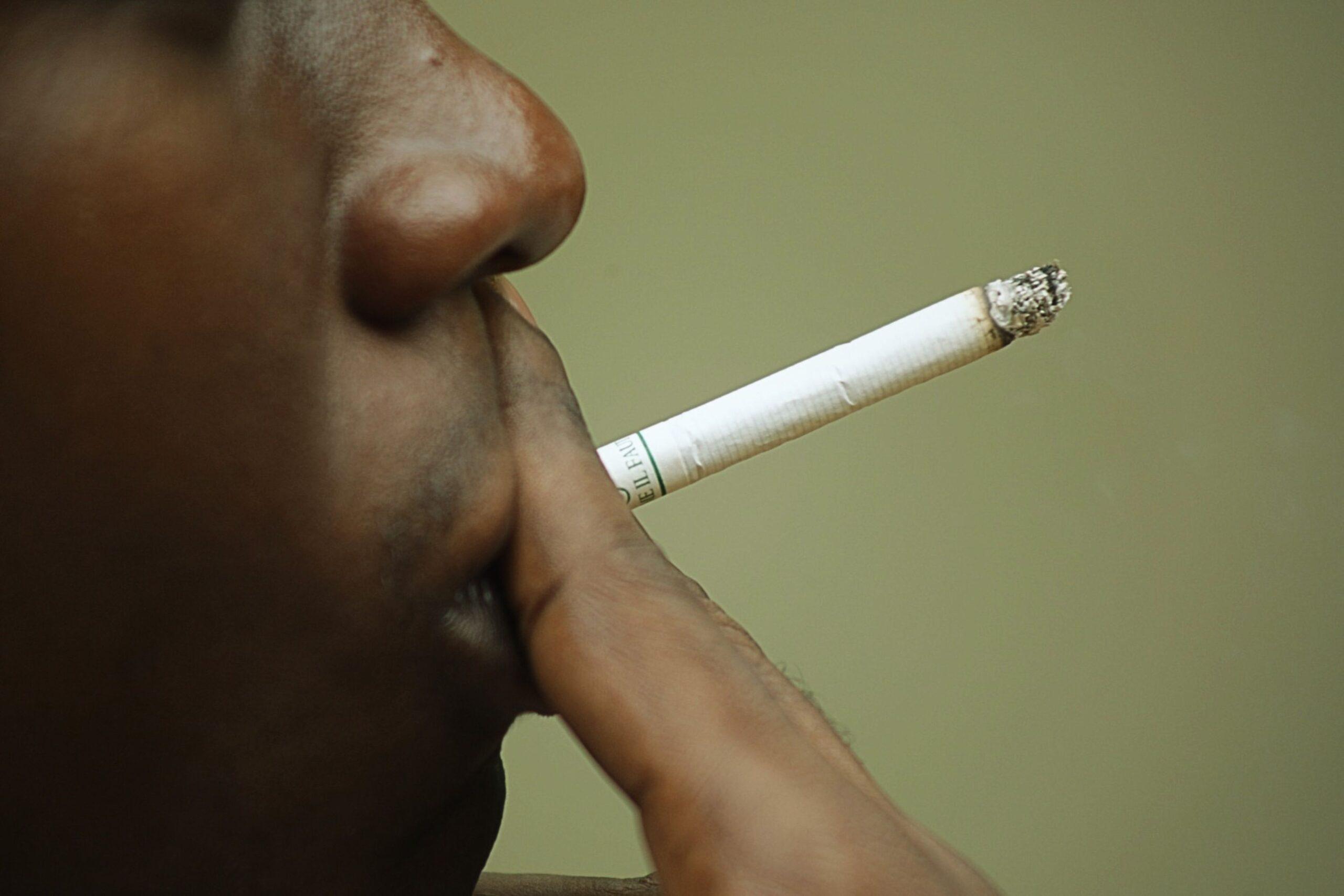
A man smokes a cigarette from the Comme Il Faut brand on Wednesday, August 12, 2026. Photo: Djouly Mombrun for AyiboPost
Jean Benson, 23, who lives in Delmas 19, says he smoked his first cigarette at age 16.
“It was a school celebration,” the young screen printer told AyiboPost. “My classmates and I wanted to try something new. So we bought cigarettes at a small shop not far from the school.”
Seven years later, he says he still smokes, although he would like to quit.
“I know it’s not good for my health, but sometimes I smoke to lift my spirits,” he told AyiboPost.
***
Developed in response to the devastating health consequences of tobacco use — which is responsible for more than eight million deaths each year — the convention requires, among other measures, a ban on all tobacco advertising, promotion and sponsorship under Article 13.
But since Haiti signed the convention in 2003, it has never been submitted to the Haitian Parliament for ratification, preventing its full implementation within the country’s legal framework.
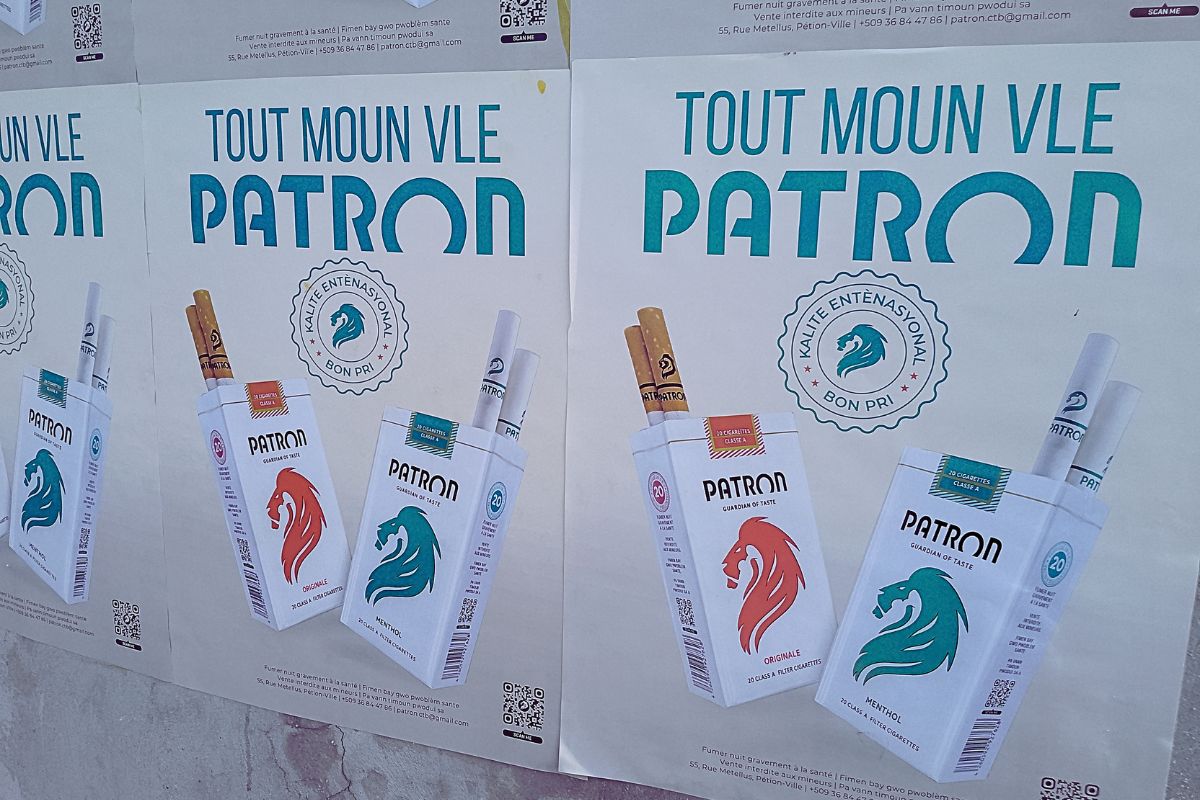
Advertisement poster for the Patron brand, Delmas 31, June 2026. Photo: AyiboPost
No government has adopted a decree-law incorporating the convention’s provisions to protect the country’s 12 million inhabitants, including children, from widespread exposure to tobacco advertising.
Public data on Haiti’s tobacco market remain scarce.
The Pan American Health Organization (PAHO) uses Comme Il Faut as the reference brand for tracking cigarette prices in Haiti, in accordance with the WHO methodology, which is based on the country’s best-selling brand.
According to the ranking established by the Directorate General of Taxes (DGI) and the General Administration of Customs (AGD) for the 2021–2022 fiscal year, Comme Il Faut ranked fifth among the taxpayers that contributed the largest amounts to Haiti’s public coffers, having paid more than three billion gourdes in taxes and customs duties.
That amount alone exceeded the combined budgetary allocations for the Ministries of Youth and Sports and Tourism during the same fiscal year.
In an environment where regulation of the sector remains limited, Comme Il Faut has emerged as one of the major players in Haiti’s economy.
In 2018, Comme Il Faut likewise paid more in taxes than three other major companies that ranked among the country’s leading taxpayers: Société Générale Haïtienne de Banque, National Telecom (Natcom), and Les Moulins d’Haïti.
Other foreign brands, including Patron and Marlboro, are also present on the Haitian market.
While their advertisements and packaging generally carry health warnings and the companies sometimes finance educational, cultural or sporting activities, these initiatives take place in a context where consumer protection measures remain limited, particularly regarding where tobacco can be consumed and minors’ access to tobacco products.
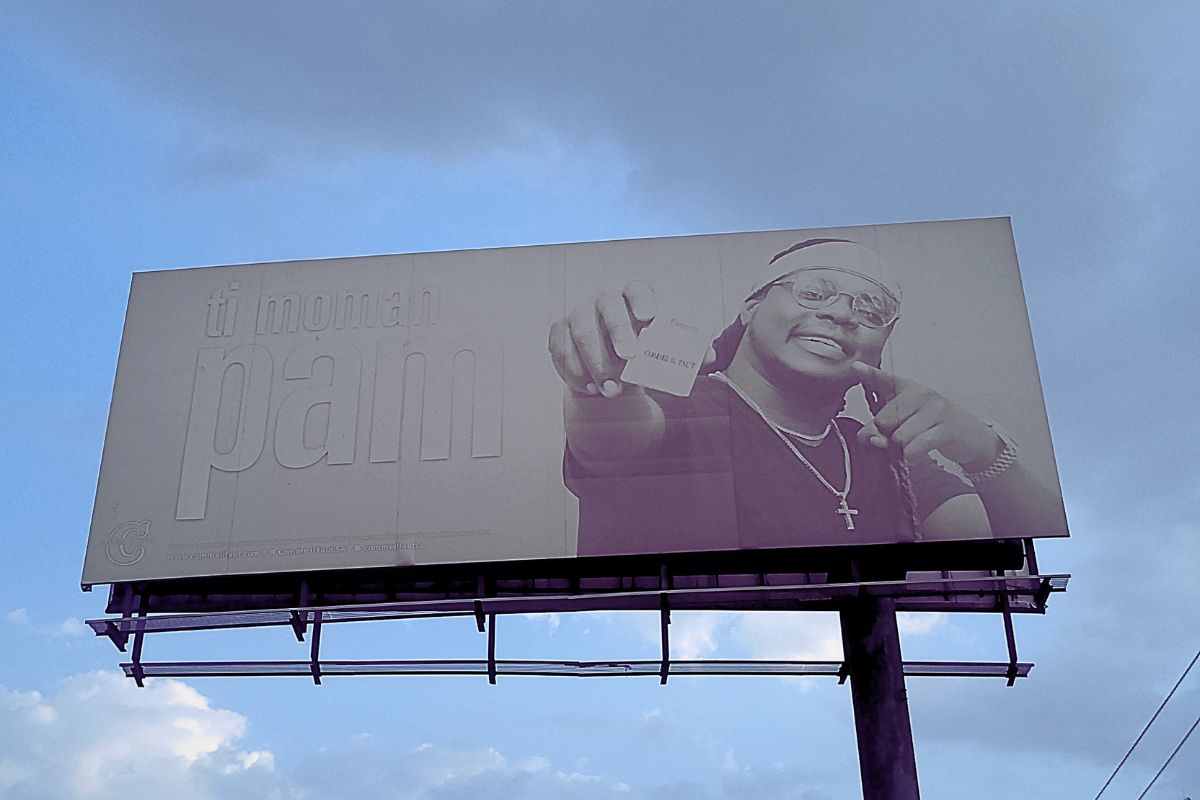
“Comme il Faut” billboard, Airport Road, August 2026.
On July 24, the company Comme Il Faut, accompanied by its ambassador, artist Afriken An, distributed caps and T-shirts bearing the company’s logo to young street vendors at an unspecified location.
Videos posted on Facebook several days earlier by the Manzè Freda Gran Jipon account also show a Patron promotional truck at the Marie-Jeanne internally displaced persons camp. Adults — some of whom were smoking — and children gathered around while a host promoted the brand.
In a 2024 report on protecting younger generations from the tobacco industry, the World Health Organization warned against indirect promotional strategies, including the financing of sporting or cultural activities and the distribution of branded items.
Such practices fall under Article 13 of the WHO Framework Convention on Tobacco Control, which recommends a comprehensive ban on tobacco advertising, promotion and sponsorship.
According to the organization, through such strategies, “the industry seeks to attract children and young people to replace consumers who quit tobacco or die.”
The WHO also warns of “growing industry interference that threatens tobacco-control policies and efforts.”
***
AyiboPost’s observations are consistent with a 2023 study on tobacco use in Haiti.
The study found that people who are heavily exposed to the media are more likely to use tobacco.
It also found that tobacco use is more common among men, people aged 35 and older, people with no formal education, those living in the poorest households, and people living in rural areas or the Port-au-Prince metropolitan area.
The authors stress the need to specifically target adult male smokers through tailored policies aimed at reducing the health consequences of tobacco use, both for smokers themselves and for people involuntarily exposed to tobacco smoke.
They also recommend that public authorities, health-sector stakeholders and community leaders strengthen awareness campaigns and adopt measures to regulate advertising likely to encourage consumption behaviors that are harmful to health.
Comme Il Faut, the Patron brand, artist Afriken An and the Manzè Freda Gran Jipon Facebook account were contacted by AyiboPost.
The Minister of Public Health and Population (MSPP), former lawmaker Sinal Bertrand, was also contacted.
None responded before publication.
***
Beyond these marketing strategies, the health consequences of tobacco use are well documented.
According to the International Agency for Research on Cancer (IARC), smoking is responsible for 15% of new cancer cases worldwide, more than any other individual preventable cause of the disease.
Numerous studies have established that smokers face significantly higher risks of developing respiratory and cardiovascular diseases, as well as several types of cancer.
Among pregnant women, tobacco use or exposure to tobacco smoke increases the risks of fetal growth restriction, premature birth, stillbirth, perinatal death, sudden infant death syndrome and placental abnormalities.
Yet tobacco use and its effects remain poorly documented in Haiti, says Bénédique Paul, a professor at Quisqueya University and one of the authors of the study cited above.
He attributes this reality to “a lack of interest on the part of the authorities.”
Jean Cantave, president of the Haitian Society of Oncology, says prostate cancer accounts for about 80% of the cases treated by the institution, which regularly receives patients suffering from the disease.
“Most of these patients smoked one to two packs of cigarettes a day for nearly 25 years,” the doctor explains.
Data shared with AyiboPost by PAHO show that the nearly 3,000 annual deaths attributable to tobacco occur in a country with one of the highest cardiovascular mortality rates in the region — 427.7 deaths per 100,000 people — roughly five times the rate recorded in Canada.
The country also has “high” rates of hypertension and heart disease.
As a common risk factor for cancer, cardiovascular disease and chronic respiratory diseases, “tobacco contributes directly to this burden,” the organization told AyiboPost.
Although the prevalence of daily smoking among adults remains relatively low in Haiti — 5%, according to the WHO — the country nevertheless ranks among those in the Americas where tobacco-prevention and control policies remain the least developed.
While several countries in the Americas have increased tobacco taxes, regulated advertising and required health warnings, Haiti taxes cigarettes at just 27.1% of the retail price of the most widely sold brand, compared with more than 60% in several countries in the region.
Despite the public health risks, health warnings are not mandatory on cigarette packages, other tobacco products or new nicotine-containing products, as required under the framework convention, the WHO notes.
Data shared with AyiboPost by PAHO show that the nearly 3,000 annual deaths attributable to tobacco occur in a country with one of the highest cardiovascular mortality rates in the region — 427.7 deaths per 100,000 people — roughly five times the rate recorded in Canada.
***
Given this situation, specialists say responsibility rests first and foremost with public authorities.
Contacted by AyiboPost, former Health Minister Josette Bijou, who is also president of the The Public Health Association of Haiti (ASPHA), pointed to lawmakers.
“I do not blame the companies, but rather the state regulators who should be acting in this context,” she said.
According to Bijou, “Haitian lawmakers are not sufficiently aware of these issues and generally do not understand their role.”
As early as 2005, ASPHA was already warning about the dangers of tobacco advertising that could encourage young people to start smoking.
Bénédique Paul, for his part, points to potential conflicts of interest in Parliament.
“Sometimes these kinds of initiatives can become subject to political bargaining,” he said.
In its 2025 report on the global tobacco epidemic, the WHO noted that more than three-quarters of the world’s population now benefit from at least one tobacco-control measure consistent with its best practices.
For Dr. Jean Cantave, Haiti can no longer remain on the sidelines of this trend.
“More and more countries around the world are getting on board. In Haiti, if the public authorities refuse to act, civil society must step in,” he said.
By : Wethzer Piercin
► AyiboPost is dedicated to providing accurate information. If you notice any mistake or error, please inform us at the following address : hey@ayibopost.com
Keep in touch with AyiboPost via:
► Our channel Telegram : Click here
►Notre Channel WhatsApp : Click here
►Our Community WhatsApp : Click here





Comments