
Head of BINUH in Haiti Answers AyiboPost’s Questions
In this interview with AyiboPost, the head of the United Nations Integrated Office in Haiti (BINUH), Carlos Ruiz Massieu, discusses relations between the United Nations and Haiti’s transitional authorities, the criticism directed at the international presence in Haiti, security issues, elections, human rights, and disarmament and reintegration efforts in the country.
A career Mexican diplomat, Ruiz Massieu has led BINUH since 2025, after holding several positions within the United Nations, including UN Special Representative in Colombia, where he oversaw the monitoring of the peace agreement with the Revolutionary Armed Forces of Colombia – People’s Army (FARC-EP). He brings more than thirty years of experience in diplomacy and multilateral affairs.
This interview has been lightly edited for clarity.
What is the Binuh currently doing in Haiti, specifically in collaboration with the current transitional government ?
Well, thank you for having me on the AyiboPost. What I can say is that, we have a specific mandate from the Security Council, but basically to support the political process, to support electoral preparations, to support the CNDDR, the dismantlement, disarmament and reintegration efforts and the strategy and its implementation and human rights monitoring and reporting.
But in general, what we are here for, – and that’s why we are so fortunate —, is to try to contribute to the betterment of the situation. We are here basically to make a contribution. We hope we can make a positive contribution for the overall situation to improve.
And that’s probably the level of our aspiration. At the end, the responsibility, but also the ownership of the processes for the Haitians. But we are here to support in whatever way we can.
Did Binuh take part in the negotiations that led to the transitional, to the extension of the current transitional government’s mandate ?
Well, we didn’t engage in negotiations as such. But we interacted in the exercise of the good offices of the Secretary General of the UN with the different actors in order to see what the different sectors, what different political actors, – what the CPT members at that time—, what the Prime Minister at that time, how they saw the after February 7 scenarios and what was the best solution for the next phase of the transition. The best new phase for the transition for the country, considering that it was going to be beyond February 7, as was originally agreed. So we did that.
We did interact. We talked to different actors. We tried to help them getting somewhere in terms of decision making.
But at the end of the day, it was for the different actors in different processes to try to make decisions, whether they were able to or not. That’s a separate story, let’s say. But we did interact.
But we would not specifically, I would say, negotiate as such.
One of the main mandates of this transitional government is to realize the elections. Do you intend to continue supporting the government, even if elections are not held at the end of the year, as planned ?
Well, we are not here for supporting any particular government as such. We are here to work with the authorities, let’s say, in order to implement our mandate and to support their activities towards that mandate. So we will continue to work on elections and their election organizations.
We believe that, as you said, that there are two important aspects of the mandate of the transitional authorities, which is preparation of elections and improved security. And on elections in particular, we’ve been working with the CEP, the Electoral Council, and with the prime minister and the prime minister’s office in moving forward on the electoral preparations. We coordinate the UN assistance of elections, and we coordinate with others, like the OAS and other international actors who will participate on the electoral preparations or will contribute to elections.
So we believe that elections is one of the main objectives of the transitional government, we believe that evidently will happen. There will be probably some changes on the electoral calendar in the future. There will be some changes that are being discussed in terms of some aspects of the electoral landscape, through electoral decrees we can discuss about that. But we will continue to work with this government on many issues, but particularly on issues that are related to Binuh’s mandate, like electoral assistance.
How do you assess the overall record of the United Nations presence in Haiti, given that the country’s multidimensional crisis continues ?
Listen, we believe that different circumstances require different responses. And in this case, ourselves, the Security Council in itself, decided on a layout of international support that is different, but that is probably fit for purpose for the current situation. So on the one hand, you have a Security Council mandate to a force, the Gang Suppression Force, which is not a UN force as such, as it was in the past, but rather a multinational effort in order to face off, to counteract the gang’s presence, influence, or even control of certain neighborhoods on the capital and in some departments. And a UN office that should support that force in a way that can sort out the obstacles and the challenges that we have seen in the past that other efforts or other layers were facing, like the MSS.
And on the side of that, we have then the Binuh, the political mission that should complement the security efforts through the mandate that we describe on organizing elections, on having good offices exercised by the Secretary General. And even to some aspects that could become very important down the road, like the strategy to dismantle, to disarm, and to reintegrate members of the gang, in particular children, to have safe exits for them. And then we have the country team, the all agency functions programs that are working on the humanitarian situation that, as we know, is very dire these days, and that also work every day in order to provide support for more development-oriented activities that should complement the security approach and the political efforts that we do. So it’s a very, I would say, unique presence of the UN in the country.
It’s probably difficult to measure its effectiveness now, but I trust that with time, with the efforts that we are providing to the force to be effective, with the political work that we do and the activities of the country team in support of the country, we can be, at the end of the day, satisfied of what we have contributed at the end of the day and what we have done, hopefully down the road we’ll feel that way. But I think I need to emphasize that, in any case, it is the merit of getting out of this crisis as well as the responsibility, it lies on the country. It’s your country, it’s the country of the Haitians, it’s the country of the Haitian authorities, and any positive movement that we expect many in the near future will be because of Haitian decisions and Haitian actions, supported by us, supported by the UN and supported by others.
But it’s important to point out that when, hopefully we will discuss this in months ahead, maybe in years ahead, we will be hopefully talking about a better scenario, a better situation, and in that moment the merit will be for the Haitians, but hopefully we have, the UN would have contributed its part to the improvement of the situation.
The population have waited for this better scenario since, let’s say, 20 years ago, from 20 years from now. How do you respond to those who think that there is no effective result from all those interventions that the international have been doing in Haiti ?
I can understand frustration. I can understand despair. I can understand if, as the situation has unfortunately not improved the way it was supposed to improve across the years. But I think today, we need to think about the future. We need to assume all of us, the Haitians, the authorities mainly, but also the civil society, also different actors, and hopefully the people of Haiti, along with us, along with the international community, really to work collectively and to work together to improve the situation and improve the current state of affairs.
I am convinced that in these cases, where we have such dire needs, such a great country with great people in such a bad situation, it’s only by all of us working together, the international actors, the national actors, working in the same direction, is the best chance that we have to be successful. So I think it’s time to see the present. It’s time to see the future. I understand frustration and maybe skepticism, but I think we need to learn from the past. We need to learn what we did right in order maybe to repeat it if the circumstances allow it. And we need to see the past and learn from the mistakes, and learn from the things that we didn’t do right, or that we didn’t do as well as we could have, and then correct those things in order to have then better chances together, to have better results and a better future.
How do you respond to those who say that the UN or the international intervention in Haiti is a kind of disguised foreign interference in the public affairs in Haiti ?
Well, we think we have to make sure that that’s not the case. We need to make sure that, as I said, that all that we do from the outside is to support national efforts. It’s really true that it should be a country led by Haitians, that the main decisions should be of the Haitians, and we should ourselves not only behave and contribute whatever we can contribute from that assumption and from that perspective.
And we need to show in every way we can, in our actions, in our decisions, in our messages, that that’s what we are here for. We are not here to fix things. We are here to help the Haitians fix things.
We are not here even to improve things. We are here to contribute, to improve things, but led by the country, led by the national actors. As I said, it’s important that at the end of the day, it is the national sectors, the civil society, very vibrant civil society that Haiti still has, despite the obstacles and the difficulties, and the political parties, the private sector.
I mean the Haitian actors, should be all the time drive the decision making and drive the actions and concrete actions for improvement of the country. But we are here for support in whatever way we can, and they, and you, and the people of Haiti can always count on us on that.
So you don’t think there is any kind of problematic interference in Haiti from the international ?
There’s always, obviously, perceptions on what is the line between contribute and then be too intrusive in terms of decision making for the national country.
But it’s always, there’s always interpretations. There’s always a fine line, as I said. But we need to make sure that we, the international, we stick on that line.
We stick in the line of contribution as much as we can, as much as we’re allowed, as much as we’re demanded, and we are requested. But always led by the Haitians. We should do that all the time. So we need to take care of that as well from our side. And I’m sure that the Haitians will do their part as well.
Let’s talk about security.
How are you currently working with the Haitian national police ?
Well, I mean, we are very much in touch every day through our colleagues in the mission. But the Security Council changed the mandate of Binuh recently, the last renewal of the mandate in January. Because, as I was saying before, the whole concept is that we have different parts of the UN system, but also different parts of the international community, performing different roles and responsibilities that are complementary to each other, but we need to avoid duplication.
So, let’s say, what we used to do in the past was obviously getting information with the police in the different incidents in the country, the different situations on the security side, helping in the capacity building of the police as well. In order for, as we hope, all that also at some point in the future, the Haitian authorities will take over fully its own security needs.
But with the arrival of the new force and the strengthening of the GSF, and with the efforts that international actors bilaterally do, like the US, Canada, France, and others in terms of capacity building with the police, the decision was made, and I would say wisely, that Binuh should not then continue to do capacity building because others are doing that. So, even though we have a day-to-day relationship in order to assess how is the situation, we have the responsibility to report on the security situation and to coordinate with others that are in the security improvement part, like the GSF, or even bilateral countries.
So, we have a very good relationship, we are in good terms, and on the other hand, we have to report on the human rights perspective any, evidently, violations of the human rights of the population, if they come from the gang’s activities, but also if they come from security operations of the authorities. So, we need to interact also for that purpose, for gathering information, but also to make recommendations in order to improve their activities. So, I would say that we have a good relationship as a conclusion with the PNH. But as I said, the mandate of BINU has changed a bit lately.
The Haitian National Police, HNP, has been implicated in numerous cases of violence and extrajudicial killings in recent years. In 2025, for example, Binuh published a report documenting dozens of human rights violations involving police officers.
First, are you still observing the same trend today? And secondly, do you believe police authorities are making sufficient efforts to take disciplinary action against officers’ acused of wrongdoing ?
Yeah, we have reported the cases that you mentioned, and we will continue to do so. I think it’s an important role that we should continue doing. But as you mentioned, we want and we wish to get concrete actions in order to address those situations, in terms of responsibility, but also in preventing and implementing measures to avoid, to reduce and hopefully to eliminate situations like the ones that we report on our human rights reports and on the Secretary General report to the Security Council.
I mean, we’ve seen receptiveness of the authorities. We’ve seen some concrete actions in regards to remedial actions in order to address these issues. But evidently, our ambition is much bigger in terms of additional specific measures.
We want to report specific trends going down in terms of extrajudicial killings, in terms of wrongdoings. But for those that their main duty is to protect the population. So we see, as I said, we see positive responses, we see actions already. But evidently, we and the country mostly need all the actions that could be put forward in order to reduce them and eliminate them fully.
And we hope to get them down the road.
Given the difficulties accessing certain areas on the ground, how does Binuh continue to conduct investigation and produce its reports on security and human rights ?
Yeah, we do have interaction through our different sections, particularly in the human rights sections, with different parts of the population and local organizations that help us to get data and to cross-reference the data with others in order to be certain and to verify what’s happening in those areas that we directly don’t have access to. That’s an important relationship that we have built over the years. A relationship of trust and confidence, that we can then continue to rely on that information that they provide. Because that we can always cross it against official information or information from official sources and end up with the best verified information on what’s happening on the ground.
Being this of due to the gang activities themselves, which as we know, they exert a great damage to the population. Or being this of actions of whatever measures on the security front from the authorities that, as we know, at some point have some collateral damage vis-a-vis the population that also need to be reported and need to be also taken care of in terms or addressed in terms of reducing the possibilities of having that collateral damage vis-a-vis the population.
Talking about collateral damages, between January and March 2026, the United Nations recorded more than 160 on the activities of collateral damages.
Yeah, I mean, as I said, we have different ways to try to provoke a change and a positive change and to try to provoke concrete measures in order to improve the situation and improve things.
Clearly, one of them is first to get the data, then to raise awareness of what’s happening through our reports. But also is to convey this information to, let’s say, the authors or those that through their activities end up having these consequences as collateral damage, let’s say, and in order for them to take measures to prevent, to mitigate, or to reduce, or to eliminate the possibilities of this happening. So we do that on the public side, we produce our reports, we present our reports that includes, let’s say, activities on the PNH. In the future, probably, – hopefully will not be the case– , but of the GSF, if that will be the case, in our reports, we will also produce that information.
And in the whatever measures the government is taking, whether it’s through also a task force, we do reports and we do convey that information through the main recipients of this information, whether it’s the government, the prime minister’s office, the PNH, and the DG of the PNH, or eventually will come to the special representative of the GSF. And with our own knowledge and with our activities also to provide what they could consider as mitigating measures, as protocols in order to reduce or eliminate the possibility of those consequences to the populations when they conduct operations. And then after, we will measure then how things are moving forward in that sense.
But again, our expectations are that those collateral damage or that damage to the wider population, let alone children, will be eventually eliminated, but certainly reduced. And we will do whatever we can in order to gather data, raise awareness, send information, propose, in some cases, remedial action, and then measure again vis-a-vis what’s happening, that this is improving and improving. So the communities could be better off, even particularly with those that want and are supposed to protect them.
Earlier in the interview, you mentioned the CNDDR, Dismantlement and Disarmament. To what extent have you been involved in the current disarmament and reintegration program supported by the National Commission on Disarmament, Dismantlement and Reintegration, and other partners ? To what extent are you involved in it?
We are pretty much involved in supporting the CNDDR. On the basis of the strategy that they have, they are producing an action plan.
They are producing a roadmap. They are making important determinations in terms of what are the avenues for the disengagement and the safe exit of children. What are the options also in the future. On the one hand, once the GSF conducts their operations along with the national forces, then to which segments of those populations, besides the being detained, arrested, trialed, sentenced, to which segments, particularly children, as we said, it will be given a path to reintegrate into society.
As you know, Haiti has what we would say a demographic bonus because it’s a very young population. And normally that’s a real benefit for the development of the country because you have, as I said, such a young population. But in these cases, we are losing those generations on those activities because they’re being recruited by gangs. They have been associated by gangs.
So, Haiti needs to recover that generation. And within the DDR, we are helping them in technically assisting them in giving all the information, not only of what we know in terms of Haiti and its history and our involvement in Haiti, but what has worked in other scenarios around the world that adjusted to Haitian reality could eventually work for the country. So, we will continue to work in that way.
That’s also potentially another door to improving the situation in power plants and in other departments, but also in a peaceful way. If there is a decision, evidently, that we expect for different groups to release children. We need to see how to not only provoke, but also to be prepared for that. And we also need to be ready in case of there will be voluntary disengagement from the activities, and not only through clashes with the public forces or with the GSF.
And the CNDDR is fundamental for that. It needs also a lot of support from the international community, investment, more resources. We need programs.
We need income-generating activities for the communities that have been victims of the gangs, but eventually for the DDR program to function. We need to rely on that, and we need also ownership on this, again, on the Haitian authorities. This is about, as I said, the country of the Haitians, and the population, the authorities, and the resources of the country should be invested in these activities that are potentially very beneficial for the communities and for the country. And could assure a more sustainable and durable solution to the current situation, and not only a temporary, let’s say, improvement that would be very welcome, but is not what we needed to be sustainable over time.
We want to improve things. We want things to be better. We want things to be safer, more secure, more stable, but we need them also not to be short-lived.
We need this to be sustained. We don’t want to improve, and then be in the same situation in a few years’ time.
Armed gangs regularly demand a full amnesty, despite the abuses committed across the country. Do you believe the government will engage in dialogue with them, or consider some form of amnesty?
Well, the authorities have been very clear in their decision not to negotiate with the gangs. And again, this is a Haitian decision, and we need respect that. Now, having said that, as we move forward, and as we move forward with a security force that will apprehend, will detain gang members, unfortunately there will be casualties as well. If there is an approach by the gangs to express their willingness to demobilize, to dismantle themselves, to give up their weapons, and a conversation on how do they need to do that, then I’m sure the government will listen. Whether there will be a positive reaction in proposing something in order to peacefully disengage big numbers of, hopefully, gang members, that we will see that. I don’t think that door should be ever closed, but it’s clear that it’s not a negotiation.
They’ve been committing terrible crimes, and they will be terrible to the communities. There’s a clear decision-making in terms of trying to and will be detained, arrested, and trialed. But if this information comes, then I’m sure the authorities will react accordingly.
And that door of listening should always be there. And the UN certainly will always be there, also, to listen and to see whether we can contribute to anything about it.
Doors remain open to them..
To listen. And then we’ll see whether there’s something that could be done. Because I think the fact that big parts of the gangs could be dismantled, give up their weapons, and be ready to move on and free up those communities, so we can help those communities to come to normal life, it’s a good opportunity now.
That doesn’t mean that this is then a start of a negotiation. It’s just willingness to listen to whatever message comes. And then if something could be done in order to grab that opportunity, then I think it’s important.
Are you aware of any path leading in that way ?
Not currently. I’m not aware of specific ones. But I’m sure there’s potential in that.
I’m sure that even naturally… Individually. Let’s not even talk collectively. I’m sure that individually, some people that are being… Because of their circumstances, because of their forced recruitment, because they were young when they were recruited, and they don’t have complete will to decide because of the situation they’ve been in, I’m sure they are thinking now that they will be happy to get out of there.
And just come to a new life with new opportunities. But I think that’s why our channels should be open to listen to whatever message comes. That doesn’t mean that we will or the authorities will react positively.
They have a very clear line in terms of how they want to approach things. But we need to be ready to listen. And then we’ll react accordingly in due course if that comes.
But for now, as I said, the decision has been very clear. No negotiations as such. But that doesn’t mean that we don’t have ears to listen.
What is the objective of United Nations sanctions ?
I think you can say this twofold or maybe threefold. On the one hand, people or organizations like gang members, criminal organizations, or even private individuals, even from whatever sector that have been conducting activities contrary to the law, those that have been violating certain terms with their conduct, whether financing gang activities. That is obviously part of the problem.
And that’s something that needs to be stopped. So to sanction those individuals, either gang members because of their activities they conduct, or those that are, let’s say, those behind helping those activities to happen. It should be sanctioned because obviously this is wrong.
And this is conduct against national laws, international laws, etc. But also by sanctioning some of those that have been involved, sends a message to the wider society in terms of trying to change the behavior. If there are others that are thinking about doing that, or there are others that even are doing that, that they know that their activities will not be unpunished, and there are no consequences of those activities.
So the whole rationale is to sanction those that have been conducting those activities. But also try to change positively the behavior of others that are thinking about doing it, or that are already doing it, in order then to take away those activities. Evidently, they have different levels of success, of impact, according to different actors. I’m talking about the UN sanctions, because unilateral sanctions by countries, obviously they have different also.
Normally the whole concept is the same, which is changing behavior of individuals or organizations. But obviously I’m not the most perfect one to talk about individual sanctions by different individual countries.
The United Nations has mainly sanctioned gang leaders. How do you assess the impact so far ?
I think they’ve been important, and it’s been important to send the message to those, the gangs that have been sanctioned, the leaders of the gangs that have been sanctioned, and others. It’s important to send the message about this. Maybe the concrete impacts have been more limited.
And I have to say, though, that the way that the UN decides their sanctions, it’s a collective effort of different member states within a sanctions committee that make the final determination on imposing those sanctions. So it’s a different, let’s say, mechanism than others. But it’s an important regime that we have.
It should continue to be working. It may be down the road will continue to add if needs be, I’m sure, according to their own proceedings, more organizations, more people. I know member states, many member states are interested in including more people in the UN sanctions.
So we will see. We will see how the committee evolves. But as I said, at the end of the day, it’s all about sanctioning activities that are against the law, and also trying, with all the tools that we have at hand, to change wrong behavior so it can benefit the overall landscape of things that we would like to help the Haitians that are very committed to improve its country.
And we should then put to the benefit all the elements that we can in order to do our part, as the UN, as international community as well.
It is important that you mentioned changing bad behaviors that are affecting the population. However, what we are seeing is that the gangs continue to obtain weapons and ammunition, and they still continue to recruit children, attack the population. How do we respond to those who think that the sanctions are not effective ?
There’s different things that we should do. One, I mean, some of them had to be with the sanctions regime, and decisions such as the arms embargo. First, we have, I believe, also good, very good and potential opportunities in the near future, because when the force and the police will increase its operations, which they will do in the probably next few weeks and months, the seizure of weapons and ammunitions will be larger.
And that only is not important because we are taking away those weapons and those ammunitions from the gangs, but also, on the one hand, because we can and when we say – we, it’s not necessarily Binuh, — but the whole arrangement, monitor and trace where those ammunitions and where those weapons come from. And whether we need to then, can recommend additional measures to implement, let’s say, in this case, if it comes from the outside, the arms embargo and other measures that have been added in the whole sanctions regime. That’s one thing.
And the other thing is that also, if ammunitions of weapons would come from other sources that are not necessarily outside of the country, so it’s not a violation of the embargo, but it’s something that also we need to revise internally, then so be it. Because the sources of not only the weapons, but also the ammunitions could be, it’s a very varied, it could be a very varied sources. It could be internal and external. And we need to close that, those, how do you say it? Those doors.
Because at the end, if you leave one of those gangs without ammunitions, believe me, their activities will be reduced dramatically. And that’s not only through active operations from the forces, but also because they don’t have ways to continue making damage because they don’t have ammunitions. So we need to stop that.
And one avenue, evidently, that has the international landscape is the arms embargo. We need to see how it’s working. And if those are coming from the outside, then we need to send a message so they can take additional measures.
If it comes from the inside, then as well, we need to talk to those actors where this is happening.
What legal obligations do these sanctions impose in a country like Haiti, especially in a context marked by impunity and judicial inaction ?
Well, that is a challenge. That is a challenge because what you expect normally when you have sanctions from a body, let’s say like the UN, saying that an x-person is violating the sanctions, what you expect to follow up is a normal judicial proceeding where then the national authorities would pursue and will see the information and the evidence that was gathered in order to make that determination in order then to sanction in the judicial system such individual.
But when you have difficulties in how the courts are functioning and you have those challenges, then it’s more difficult to follow up. So it’s a challenge.
I would say Haiti is not the only country that’s facing this challenge. Many of the countries where we have these regimes have similar challenges and problems. Now, in terms of certain activities like mass crimes, like financial crimes, like sexual abuse, we have almost operational the judicial polls that we have already magistrates.
They are waiting to appoint judges. They have the building already in place. So we hope that that’s a buildup that also with a lot of support from international community and with our colleagues from the UN in human rights and in UNODC working on this, that will help also in increasing the strength of the judicial system, at least for these activities that have been hampering the country and are part of those coincidence of that evidence that made the sanctions committee sanction certain individuals, organization, et cetera.
It’s because of mass crimes. It’s because of financial crimes. It’s because of, in some cases, of sexual violence-related crimes.
So we need to continue strengthening the judicial poles. We hope that they will become operational. If not, I mean, this month, hopefully in the coming weeks, and that can help too.
Probably will not fill the gap perfectly, but at least will help to have a continuity of the sanctions imposed and then the next follow-up steps that we need the country to take in order to investigate trial and sentence, if found guilty, those individuals. Because it’s what you expect within a national country, the follow-up actions on those.
According to Human Rights Watch, nearly 1,000 people, including children, were killed between March 1st, 2025 and January 21st, 2026. Who do you think should be held accountable for these violations, the Haitian government or Victus Global, the private military company that are currently operating in Haiti ?
Well, what I would say first is that going forward in terms of what I was mentioning before in terms of the role of the UN, also along with the Human Rights Watch, and we work with them very closely in terms of data gathering, in terms of information. It’s about evidently first raising awareness of what’s happening, then conveying this information. In this case, we convey this information when we convey it to the national authorities. Because this is a tool and a decision and a mechanism that the government is using in order to counter the gangs in the country. So it’s obviously their responsibility to make sure that whatever measure they take, even if it’s through a private company, they will reduce the possibilities of these situations to happen.
I think in terms of overall responsibilities, I think in these cases, if things get investigated on how things happen and how one important aspect, as I said going forward, is to see what measures can be implemented in order to avoid these situations to happen. And if there’s any recourse, evidently in these cases, there’s need, obviously, responsibility and response from the government, but also it happened, as we discussed before, sometimes with the national forces, sometimes it could happen with the forces that will be working very soon in the country in order to counter the gangs. The important thing at the end is to have a clear delineation of responsibilities because there will be joint operations, for instance, between the GSF and the PNH.
There will be different operations. So it’s important to have roles and responsibilities in order to see who should respond to what, but also, more importantly, in order to avoid these situations to happen. We, the Human Rights Office, UNICEF, when it came to children, we were very concerned when there were information about children being, let’s call it collateral damage of operations.
But the most important thing is to see that they take action in order to prevent these things to happen. And that’s why I think all actors should do their part. And all actors, they take on this important activity in order to counter the gangs.
And let’s not forget that, but that they reduce and mitigate all the possibilities for this to happen.
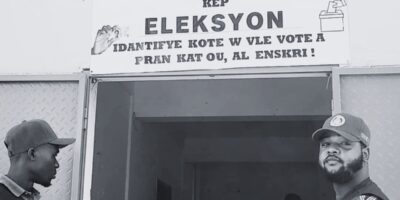
Concerns have been raised regarding the transparency of the voter registration at least ahead of the upcoming elections.
Will the United Nations support an independent and transparent audit of the electoral rall before the vote ?
I think it’s always need to strike a balance to make sure that the process is as transparent and as a legitimate and send the message of all the assurances needed for the political actors to compete in as free and fair elections as can be and as legitimate at the cost of doing this. And I’m saying that because this enter also in the area of the current budget discussions. At the end, we understand that an important budget should be put in place in order to get all the elements needed in order to have in these conditions as legitimate selections as we can and as representative as it can.
But at the same time, with a country with so many needs, you have to have a budget that is reasonable, that is not spending more than is needed in order to use the other resources for other needs of the country and of the population. So in case of the audit, I mean, we will never be against an audit in principle. It’s just a matter of how long do we take in order not to postpone further the elections and how much it would cost vis-a-vis the overall budget discussions that is already taking too long and is still not close enough in order to get a budget approved.
Hopefully I’m wrong and the budget could be approved very soon. So, but in principle, we will never be against any kind of independent audit on anything because it only adds transparency, assurances, and elements that probably the citizenry or the political parties sometimes need in order to feel that they are having a electoral process that is going to be as exemplary as it can in the current conditions.
Given that Binuh supports women’s active participation in politics in Haiti, what is its position on the recent appointment of a man as director general of the Ministry of Women’s Affairs, an institution regarded as a major achievement of Haiti’s women’s rights movement ?
it’s important to aim and to try to achieve gender parity, which is 50-50 in many aspects of our political life.
And that even includes the 50-50s for the UN, for instance, our own objectives. And we are working all the time to get those objectives. The countries have their own different thresholds and that’s aspirations.
And in the constitution of Haiti is 30%, which is important also to work towards that 30%. And that includes ministries. And they should continue to work on that. I think in the last change of cabinet, there was a slight improvement, getting closer to 30, that was important.
Now, in the case of specific positions, I mean, we have, even in the UN, we have a campaign that is he for she, which is we should push men to be part of this agenda in order to improve gender equality, women empowerment, women peace and security, participation of women as part of the solution of conflicts. So a specific post for specific directions within women’s institute, women ministry, gender ministry, I’m not too concerned as long as he, in this case, is a champion of the gender cause. So that specificity does not trouble me.
What the country should aim at is getting that 30% of the constitution, getting the numbers and then getting to reality. One thing is then to achieve then the numbers and the other thing is that in reality, decision-making of the country, political participation is really meaningful and we have more or less parity when it comes to decision between men and women. It’s not only formal achievement of the goals.
So all these are important. So in this specific, I’m not too concerned specifically in this case as long as he’s a champion of women empowerment, of gender issues and of the sort. But it’s up to the Haitians again to make those decisions.
Have you noticed, have you noted some bad perception from the public about the United Nations in Haiti ? And what do you think about this?
I cannot say I have noticed or I have perceived it. But I do know that as we discussed at the beginning, that in our history in the country, we have made right decisions.
We have made right contributions and good contributions to improvement of things in certain moments of time. And that sometimes we have made mistakes as an organization or parts of the organization have not behaved the way they should have sometimes. And we have a history and story of successes and failures mixed all together.
I can say that I feel very fortunate and very honored and privileged to be here and try to do my part in contributing positively to the situation in Haiti, to the betterment of the Haitian population, to be really to contribute to the country, to be in a better place. I will do whatever is in my power and in my hand to do that and to carry not only Binuh, but as representative of the secretary general to carry the whole UN, to work in the right direction and to produce more positive results. To be the best contributor and the best ally and partner of the Haitian authorities, the Haitian sectors and the Haitian population mainly. And that’s if there are, which I don’t doubt, there are corner sectors of population that by all this mixed history of the UN and have had any not so good perception about our history and what we have done and what we do.
I hope that what we contribute from here onwards, it can change their minds, hopefully. But let me assure that we are here to help, to contribute. We are very happy that we are here, that we have this opportunity and that we have this opportunity to improve, but also to improve ourselves, to change things and even if it’s the case, to change perceptions.
Thank you, Mr. Ruiz Massieu, for receiving AyiboPost and for being available for us.
Thank you for having me. It’s been a pleasure. I’m always available. Hopefully we will talk in the future whenever things hopefully have improved somewhat and hopefully we have been able to contribute ourselves on that scenario.

Comments